What Challenging Students Really Need From Us
(Many Tap teachers eventually discover this... the hard way.)
LOTS OF TEACHERS JUST LIKE YOU HAVE CLICKED THAT POLL. WHY?
Because we eventually encounter the same kinds of students:
• The student who rushes the rhythm, no matter how many times you say “slow down.”
• The beginner who looks completely overwhelmed even in warm-ups.
• The dancer who picks things up quickly and starts craving something deeper.
• The student who, for any number of reasons, just loses focus.
Most teachers don’t just have one of these students.
They often have all four - in the SAME CLASS.
And that’s where teaching Tap gets interesting.
Why?
Because at first glance, these can feel like four completely different problems.
But very often they point to ONE teaching challenge underneath.
WHEN I FELT LOST AS A TAP STUDENT...
Quick backstory: Years ago, I took classes at Broadway Dance Center in NYC with dancers from Bring in da Noise, Bring in da Funk.
They taught fast.
Really fast.
To be fair, I signed up for advanced classes, where the expectation was that dancers could pick up material quickly.
In lower-level classes, teachers gave more breakdowns.
(Honestly, I probably should have been in those classes.)
But there I was — standing in the back corner of the advanced class, completely lost.
For a moment, I remember thinking about quietly slipping out the door, hoping no one would notice. My pride wouldn't let me leave...I pasted on a smile and stayed determined. But afterwards, I did tell my friends how tough it was!
Not because the teachers were doing anything wrong.
But because being lost in a class feels awful.
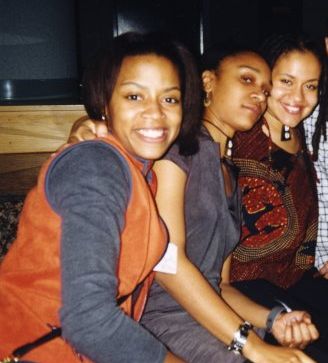

Pics: Me in orange - early NYC days with friends & Tap dance buddies.
MOST OF US HAVE FELT THIS, RIGHT?
If we’re honest, most Tap students have experienced some version of this feeling:
being lost or overwhelmed in a master class or a workshop.
That experience stayed with me.
Because years later, when I started teaching, I began recognizing those same moments in my own students.
THE STUDENTS WHO STRETCH US
Early on, as Tap TEACHERS, we encounter students going through the VERY problems that we had:
• the rhythm struggler
• the overwhelmed beginner
• the impatient advanced dancer, craving more
• the student slowly disengaging
At first, those students frustrated me. I had forgotten all about my own student struggles haha.
I thought, Why can't they get it? What's wrong with them?
But eventually I realized something important:
➡ The students who stretch us the most are often the ones showing us where we need to grow...as EDUCATORS.
These students can't just copy and "get it." They need to be truly TAUGHT.
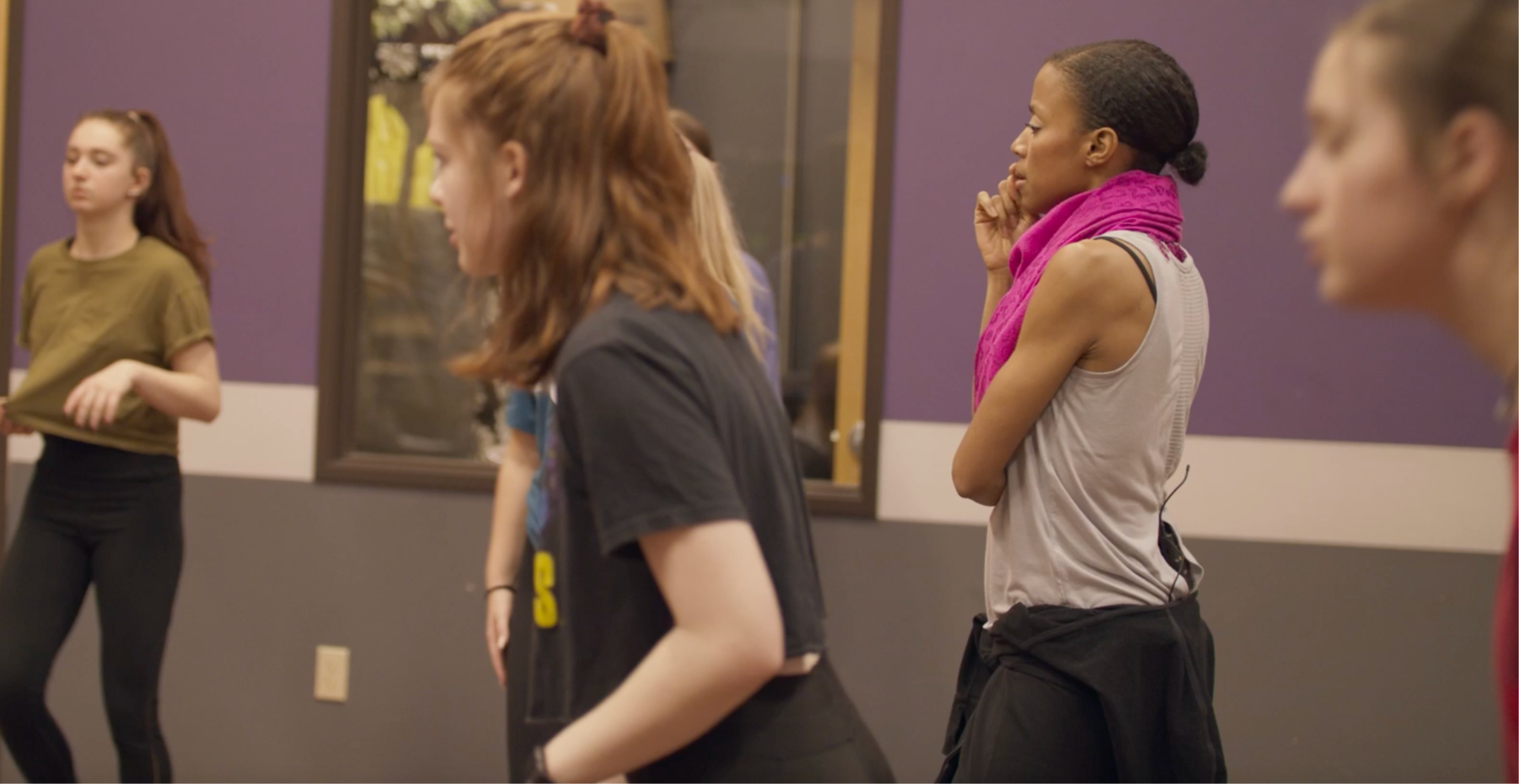
😔 ONE STUDENT I'VE NEVER FORGOTTEN
Years ago, I had a student who struggled in my class and didn’t return the following year. I hadn't grown enough as an educator to support her.
That experience hit me so hard - it stayed with me.
It pushed me to keep improving the way I structured my teaching and helped students understand rhythm.
Later, with another challenging student, I had better skills, but my impatience was still there. I then discovered something simple but powerful.
For an entire month, I made it a point to look directly at her and smile every class...long enough for her to awkwardly smile back!
I needed to show her she belonged in the room. And she stuck with it.
Small shifts like that slowly (too slowly) changed the way I approached teaching.
WHAT TEACHING TAP REALLY ASKS OF US
Most tap teachers are managing several kinds of students in the same class...
often all at the same time.
Which means teaching Tap requires more than knowing what steps to teach and when.
It requires the ability to:
*adapt
*guide
*encourage
*and structure learning differently for different students
Even in a short class.
Even once a week.
Making every minute count.
HERE'S WHAT'S MISSING
When juggling the variety of students who appear in the same class, lesson plans that you poured energy into tend to fly out the window.
The varying needs start pulling at you, all while the clock is ticking.
It’s a lot to carry.
Many teachers that I've trained have this realization:
Their old plans had good parts, but they were missing the flexibility and adaptability to serve the whole class at the same time.
They needed a fresh, flexible structure and new teaching approaches to make that structure serve their students' needs in real-time.
Then, students begin understanding faster, classes feel lighter and more fun, because more meaningful progress is being made, even by the students who struggle the most.
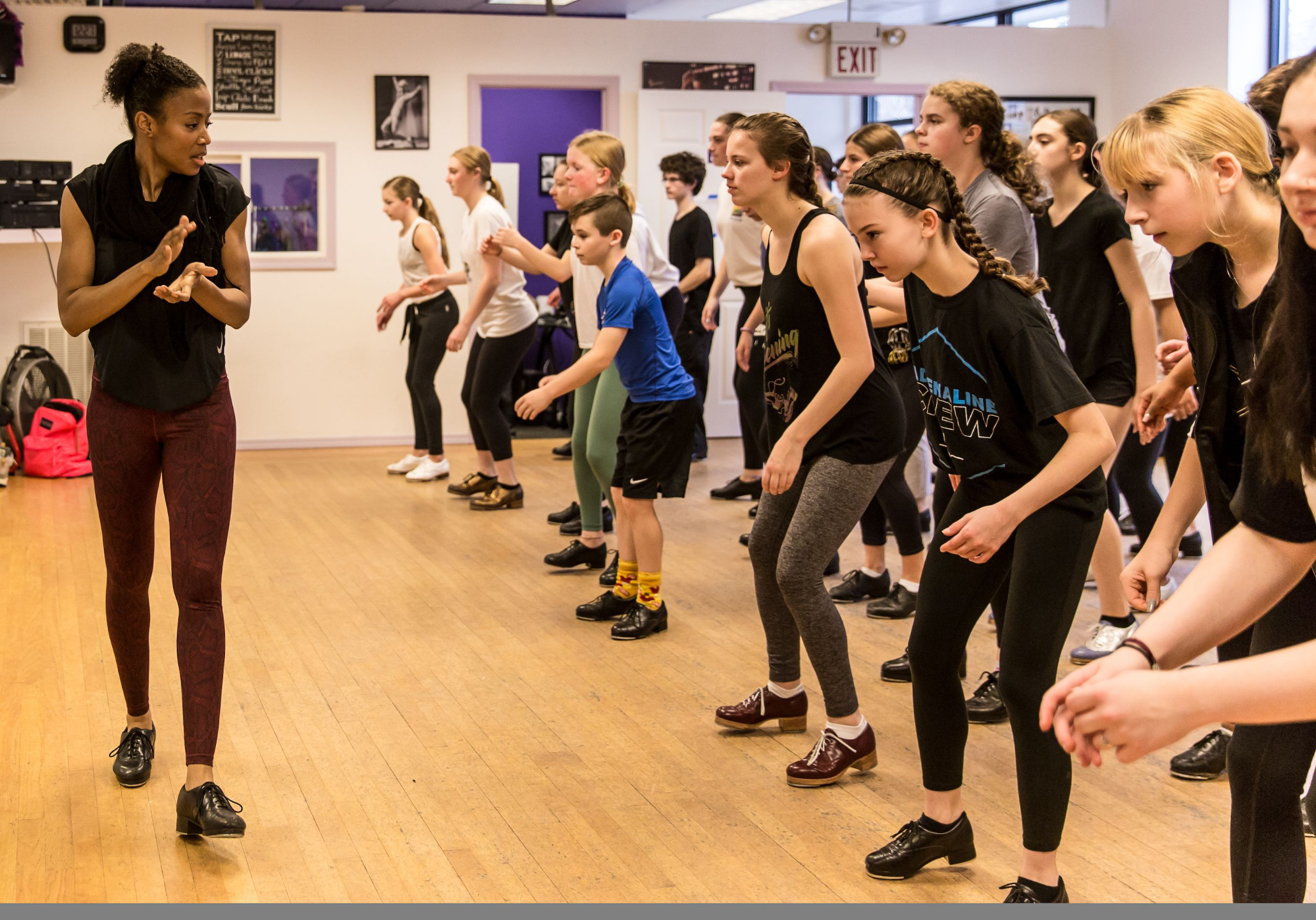
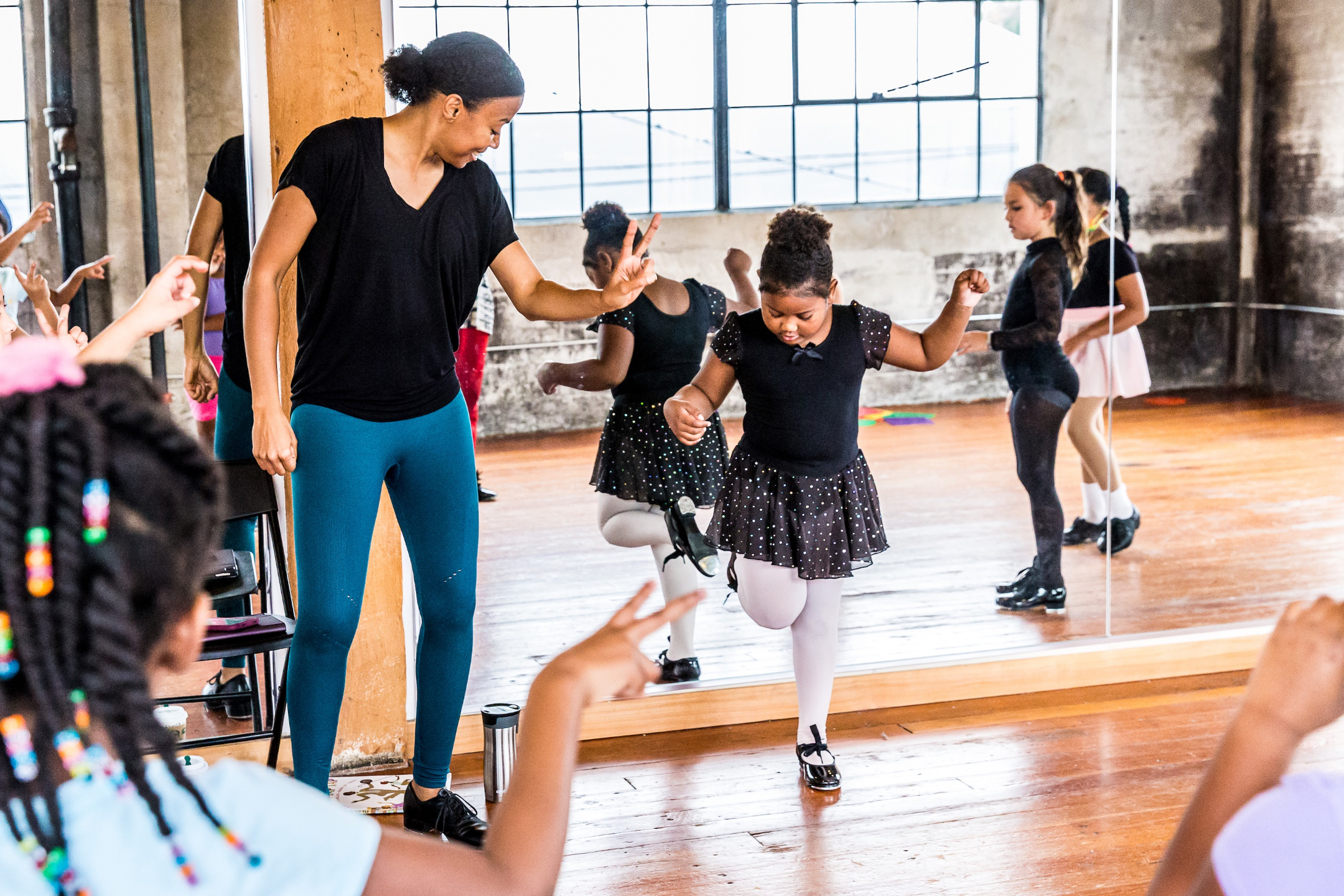
HARD TRUTH: THE REAL ROLE OF A TAP TEACHER
If our students didn’t have struggles, if they didn't need our help…
We wouldn’t have a job.
We stepped forward to do that job, to keep Tap alive, to teach, maybe when others couldn't (or wouldn't). That first step was huge.
Next? Students need us to keep sharpening our teaching. Commit to our development as educators.
They need us to rise to the challenge of bringing out their potential.
Fun fact! The word educate comes from educe, meaning:
to bring forth.
That’s our role.
To draw the best out of every Tap student who walks into our classroom.
WHY I CREATED THE TAP TEACHERS’ LOUNGE
Over the years, I noticed many Tap teachers were wrestling with the same questions:
- How do I help struggling students succeed?
- How do I challenge advanced dancers without overwhelming the others?
- How do I keep students engaged/excited week after week?
That’s why I created the Tap Teachers’ Lounge.
It’s a place where tap teachers strengthen the teaching skills and structure that help them support all types of students in the same class.
Because when teachers grow…
students grow too.
IF THIS SOUNDS FAMILIAR
If you'd like to continue strengthening your teaching in this way:
👉🏽 Join the Tap Teachers’ Lounge Priority List
Priority List teachers receive the best registration rate when enrollment opens.